US Letter
8.5 × 11 inches
Download US Letter PDF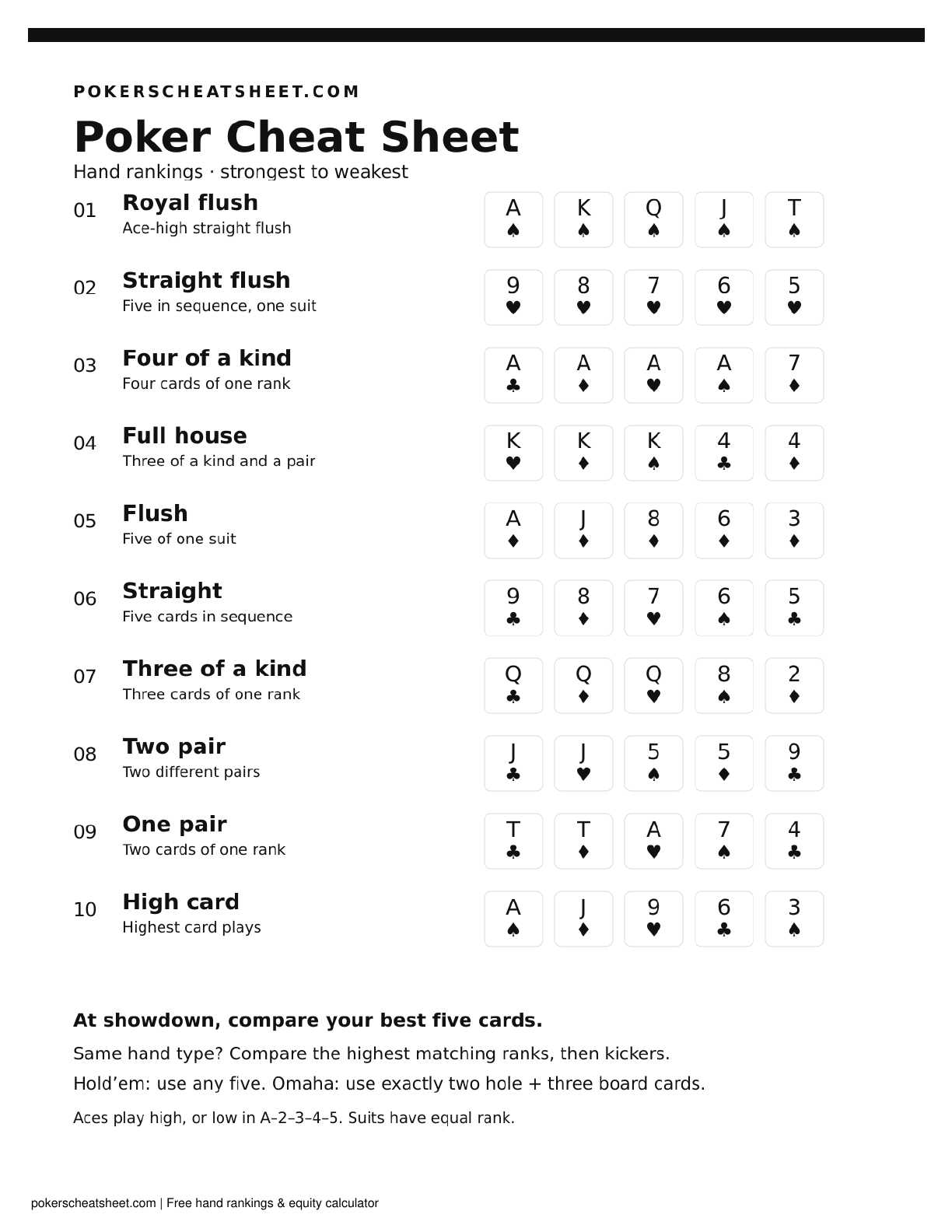
Choose your paper size or print four pocket cards on one sheet.
8.5 × 11 inches
Download US Letter PDF210 × 297 mm
Download A4 PDF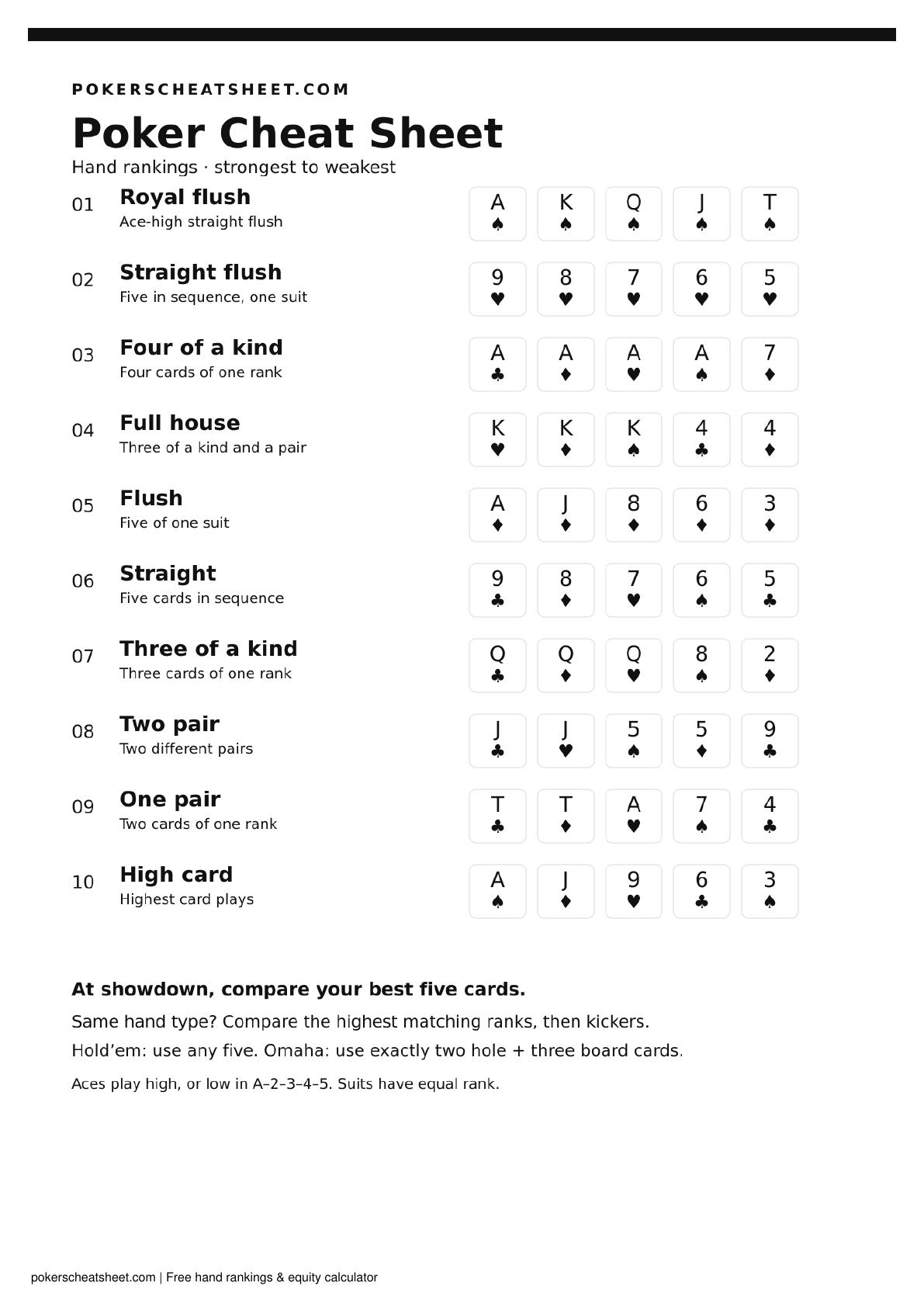
Four 2.5 × 3.5 inch cards on US Letter
Download Pocket cards PDF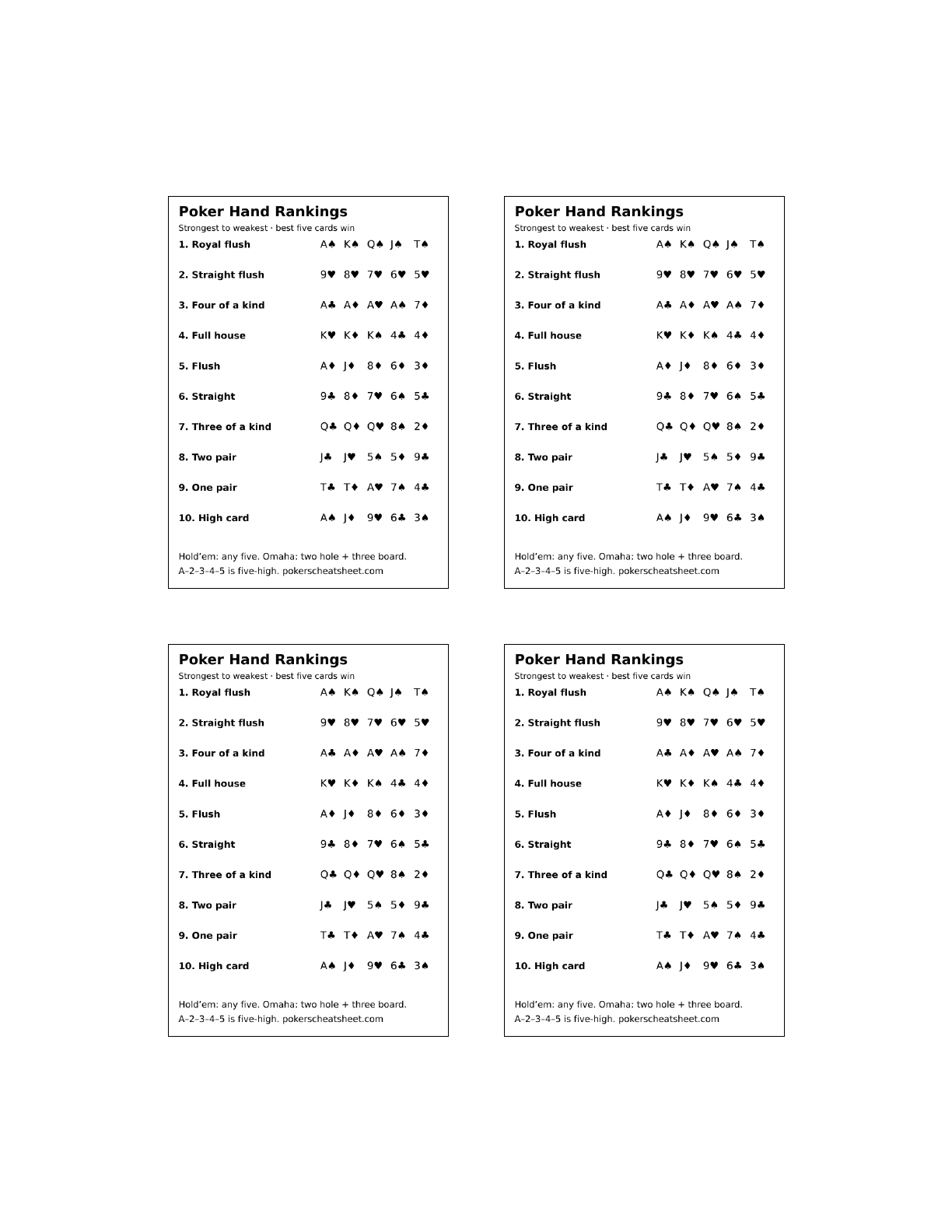
The Letter file gives each hand its own row, with the hand name beside the example cards and a definition underneath. The ranking runs down the page, so players can settle a hand-category question by finding the competing rows. The higher row wins before the ranks within that hand type come into play.
Choose Letter for an 8.5 × 11 inch sheet. Use this version when your printer is loaded with Letter paper or when you want a reference to keep beside the chips.
Choose A4 for a 210 × 297 mm sheet. The A4 file contains the same chart and notes, arranged on an A4 page. Its paper shape is taller and narrower than Letter. Choose it when you keep A4 paper at home, school or a club.
The pocket PDF puts four 2.5 × 3.5 inch cards on one Letter page. Each copy is a complete reference with the hand names and their example cards. Its shorter footer carries the Hold’em and Omaha card-selection rules and the wheel straight.
Choose the pocket version to give players their own copy or to keep a reference with a deck. The compact card shows the ordering at a glance; the larger sheets give more room to the hand descriptions. The borders around the pocket copies are the cutting guides.
Read from royal flush at the top to high card at the bottom. A row beats every row below it. With the same hand type, compare the matching rank and then the kickers, highest first.
Aces can play high in T–J–Q–K–A or low in A–2–3–4–5. Suits have equal value. In Hold’em, your strongest five cards can include zero, one or two hole cards. In Omaha, use exactly two hole cards and three board cards.
The pocket layout keeps the hand names and example cards together on each card. Use the hand comparison tool for a deciding kicker or tie explanation.
For a screen image, choose the portrait, landscape or black-and-white PNG. The poker cheat sheet homepage adds exact five-card probabilities and the compact equity calculator.
Print the pocket PDF on Letter paper and cut along each border with scissors or a paper cutter. Each card keeps the title, all ten hands and the footer rules.
The PDFs use black text on white paper. Each suit has its own symbol, and all four suits share the same value when comparing hands.
Start with the pattern: matching ranks, consecutive ranks or a shared suit. A flush example illustrates cards in the same suit; a straight example illustrates consecutive ranks. The actual ranks shown are examples of that category. Other cards with the same pattern belong in the same row.
For a full house, identify the trip rank before the pair. For two pair, compare the higher pair before the lower pair. With a single pair, compare the pair rank first, then the kickers in descending order. These steps settle hands within a row after the chart has settled the category.